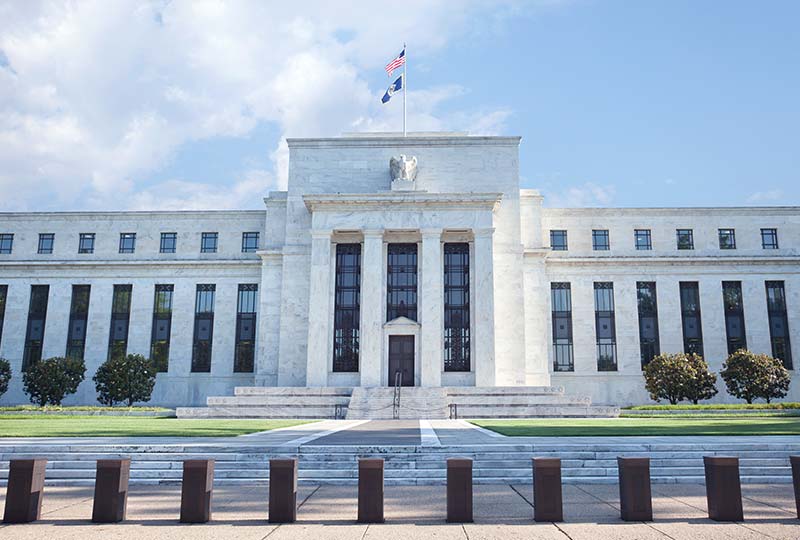
The Federal Reserve has signaled that it intends to cut interest rates in 2024. No one knows for sure how deep or sustained those cuts will be, probably not even the Fed itself. A lot depends on economic data that needs to show inflation is under control.
Why are so many so keen on falling interest rates? First, it would be a clear sign that the Fed believes inflation is no longer a major threat. Second, lower rates are good for business executives who need to borrow for expansion and acquisitions. In addition, lower rates are good for the housing market, since they make loans less expensive for would-be homebuyers.
But finally, falling rates, even just the anticipation of falling rates, may provide more opportunities for bond investors to buy long-term. Many investors like bonds for a number of reasons. One, they are a hedge against other investments, especially the stock market. In addition, municipal bonds are a way to sidestep taxes.
But more importantly, bonds can be a good investment. How to invest depends on the interest rate environment. Since before the COVID-19 pandemic, interest rates were low, and the Fed kept them down to stimulate the economy. But when inflation started to soar, the Fed embarked on a policy of aggressively raising rates to restrain inflation. That hurt bond prices.
Relatively high yield with less risk
“Any decision to increase the bond allocation is up to each individual investor, but investors who have been sitting in cash waiting for higher yields don’t necessarily need to wait anymore,” said Colin Martin, Fixed Income Strategist at Schwab. “Adding bonds to a portfolio provides diversification benefits, and today they offer some of their highest yields in years.”
Part of the dilemma now is the inverted yield curve. Basically, it shows that the yields on short-term bonds are higher than long-term bonds. This has made shorter-term bonds more attractive. But the higher yields come with greater risk. Once the Fed starts cutting interest rates, yields will start to fall. Thus, investors will confront lower yields when their maturing bonds come due.
On the other hand, by acquiring longer-term bonds, investors can lock in relatively higher yields now than they may be in the future, even if they are currently lower than short-term bonds. What’s more, there’s less risk when the bonds mature.
In recent years, investors have looked to stocks for higher returns and cash for low risk. Short-term bonds with higher yields seemed most attractive. But they now carry more reinvestment risk if the Fed lowers interest rates. Overall, bonds played a smaller role in investment strategy. Cash is safe, but with inflation still high, investors lose out on returns.
“But now may be a better time to put some of that money to work earning higher returns, without a lot of risk. Longer-term bonds offer that advantage,” notes Jonathan Beck, CEO of Crown Financial Partners. He emphasizes that this should be considered in tandem with an investor’s goal of developing and maintaining a well-balanced portfolio in line with risk tolerance. Diversification is key, with a mix of short-term and long-term bonds and cash for liquidity, along with other investments.
At the same time, investors need to keep one eye glued to the Fed. If rates come down very quickly, this window may not remain open for long.
“It’s time to take money that was shifted away from appropriate bond allocations during the period of historically low interest rates to gradually move money into longer-term bonds,” agrees Bill Merz, Head of Capital Market Research at U.S. Bank Wealth Management. “Even after the recent decline in longer-term bond yields, they remain far more compelling today than they have been in years. It’s possible to generate reasonably attractive returns in a mix of bonds without extending their risk budget.”