In much of the world, the use of alternative energy sources is way up. It is being propelled by solar and wind power, and the expansion of electrical vehicle production. Governments have stepped up their efforts to promote clean energy usage. The U.S., for example, is pushing its program of lending $400 billion to clean energy projects. Private equity and consumers continue to target new technologies to expand the use of clean energy.
But this trend of transitioning toward clean energy has been thrown off track by, of all things, new technology in the form of Artificial Intelligence. The data centers that drive AI are electrical-power hungry. According to Goldman Sachs, that data center power demand will grow by 160% by 2030. That will amount to 8% of all energy usage by 2030.
Ben Inskeep is Program Director at Citizens Action Coalition, a consumer group that monitors the energy impact of data centers. He calls the expanded use of electricity for AI “astronomical.”
“We don’t have enough power to meet the projected needs of data centers over the next five to ten years,” he said. “We would need a massive build-out of additional resources.”
You would have to turn a blind eye to the media not to notice how the tech giants have pounced on AI as the force behind their business growth. To feed AI expansion, these firms need to extend their data center capacity. Microsoft, Google, Amazon, Meta, and others will construct new data centers to shore up the power grid.
Data centers globally consume 1-2% of overall power. This will grow to 3-4% bythe end of the decade. “In the U.S. and Europe, this increased demand will help drive the kind of electricity growth that hasn’t been seen in a generation,” according to Goldman Sachs.
What does this mean in terms of the impact on clean energy? “Along the way, the carbon dioxide emissions of data centers may more than double between 2022 and 2030.”
Tech firms’ plans to dramatically cut carbon emissions seem to have given way to AI priorities. Google’s emissions last year were 48% higher than in 2019, largely because of data centers and the rise of AI. Microsoft’s emissions shot up 29% last year from 2020. And Meta’s emissions jumped 66% from 2021 to 2023, according to a report in The New York Times.
Efforts to offset increased carbon emissions
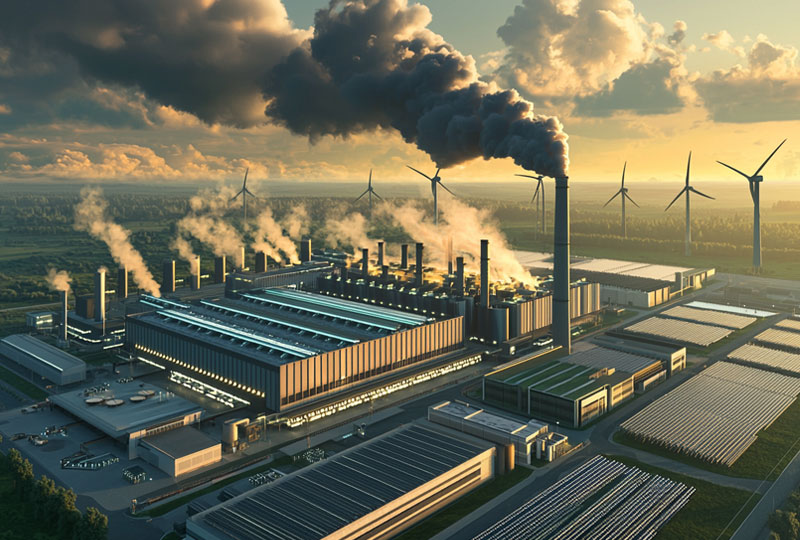
The larger firms are seeking to offset the rise in carbon dioxide emissions by looking to clean energy sources, like wind and solar power, but so far these efforts have been minimal. What’s more, they are also tapping traditional fossil-fuel sources. New natural gas structures are being built, and coal plants that were previously scheduled to close are being kept open. Nuclear plants are also being planned.
In addition, electrical power usage will only grow as more companies find ways to use AI. “As companies begin to utilize AI for more than just large language models, we can expect many individual firms’ electricity usage to increase,” noted Ariel Cohen, Senior Fellow at the Atlantic Council. “This does not simply drive more data centers to be built, but for data centers to use more power as well.”
It may well be that some of the forecasts on AI expansion and the build out of data centers seem to be on the low side. Still, environmental groups and government agencies are beginning to register their concern. To them, private firms are not likely to devote the necessary resources to develop cleaner energy to feed AI. This has attracted the notice of the federal government.
It is pushing clean energy as the way to power AI, which could spur more federal funding projects and draw the interest of investors.
“Near-term data center driven electricity demand growth is an opportunity to accelerate the build out of clean energy solutions, improve demand flexibility, and modernize the grid while maintaining affordability,” according to the Federal Department of Energy. “Today, solar energy, land-based wind energy, battery storage, and energy efficiency are some of the most rapidly scalable and cost competitive ways to meet increased electricity demand from data centers.”