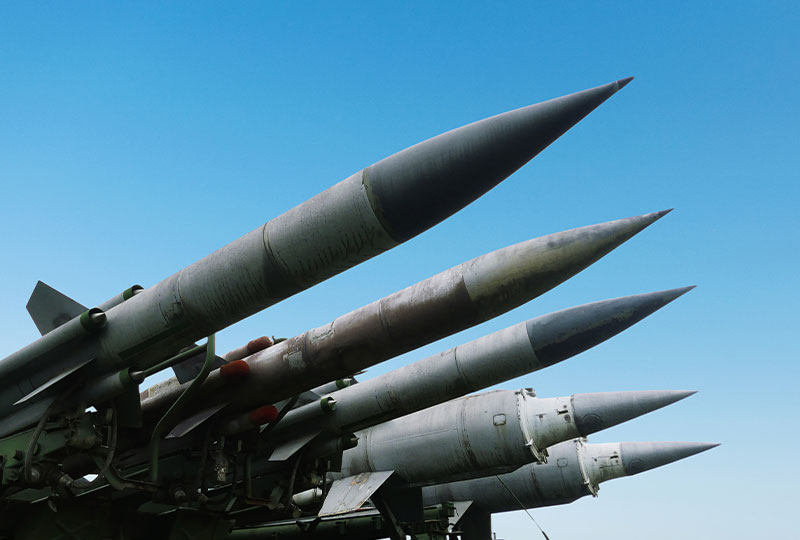
As the saying goes, history has a tendency to repeat itself. That may be the economic lesson for the next few years.
In the 1920s, Germany and much of the world experienced a severe economic depression, high unemployment rates, and runaway inflation. The Nazi party assumed power, scraped the Versailles Treaty, and revved up Germany’s war machine. In short order, unemployment disappeared and the economy thrived.
The same may be about to happen in 2025. The Trump Administration loudly proclaimed its intention to cut back its involvement in NATO and in defense of counties like Ukraine. These new policies have prompted other countries like Germany to significantly boost their own defense spending. Keep in mind that Germany was once one of the leading economies in the world. It still ranks high today.
Germany’s defense spending will boost its growth and is likely to push other nations to follow the same path. That’s a real possibility, even given potential tariffs.
“The economic growth outlook is improving in Germany—and in Europe as a whole—amid a fiscal plan that emerged after Germany’s federal election and the prospect of higher military spending across the region,” noted Goldman Sachs Research.
Growth for Germany?
The forecast for real GDP growth in Germany this year rose to 0.2% from flat, according to Goldman Sachs Research Chief European Economist Sven Jari Stehn. In addition, he raised the 2026 forecast by half a percentage point to 1.5% and increased the estimate for 2027 to 2%.
Some of this could change as a result of tariffs, but Germany and other European firms might actually profit by drawing closer to China and other Asian economies.
Goldman also predicted a slight rise in growth throughout the Eurozone. “One reason is that we expect stronger growth in Germany to spill over into neighboring countries,” wrote Stehn. “Another reason is that we now expect the rest of the Euro area to step up military spending somewhat more quickly in response to the German announcement.”
In fact, defense and infrastructure spending in Germany could raise an estimated 3% of gross domestic product, commented Evercore, ISI an investment bank. For its part, the European Commission proposed a defense fund of 150 billion euros. That would be $164 billion, noted a report in The Wall Street Journal.
“WWII got the U.S. out of the Great Depression; Europe’s rearmament should do wonders for Europe’s cyclical outlook,” asserts Stephen Jen and Fatih Yilmaz of Eurizon SLJ Capital.
Certainly, countries supporting Ukraine have been dismayed by the uncertainty of future American support. The UK under Prime Minister Keir Starmer and France under President Emannuel Macron have pledged to back Ukraine. Knowing they may no longer be able to count on U.S. military strength, numerous European countries are getting the green light from their parliaments to boost spending on military hardware.
Investors and business executives in the U.S. may see Europe as a safe haven. But some countries in the Far East are predicted to blossom, as well. China’s economy has shown signs of very positive growth for 2025, in the 4.8 to 5.0% range, and India and Brazil seem to be booming.
What has U.S. business and investment leaders spooked is the uncertainty emanating from the U.S. economy, mostly driven by tariffs.
The Business Roundtable reported that CEOs had reduced hiring plans and capital expenditures and cut sales and revenue forecasts in part due to “an atmosphere of uncertainty.”
Additionally, The Organization for Economic Cooperation and Development cut its forecast of economic growth in the U.S. for 2025 from 2.4% to 2.2% in 2025, and from 2.1 to 1.6% in 2026.
“We’re already seeing high trade uncertainty and economic policy uncertainty,” pointed out Alvaro Pereira, OECD Chief Economist. Besides curtailing growth, OECD and other economic forecasters are noticing a rise in inflation across most nations, largely precipitated by the U.S.-led trade wars.*
*Material provided by Trendline Financial