The Middle Eastern War of 2026 will be studied and assessed for years to come. But the war has already left the United States and the rest of the world with some lessons that are worth acknowledging and perhaps absorbing now to avoid future conflicts.
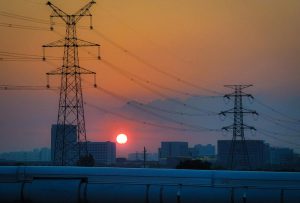
The world is still energy dependent. One would have imagined that some 50 years after the Arab Embargo, the nations of the world would have learned how to be independent from oil. The trend to gradually replace some fossil fuels with renewable energy started out well enough, but has faltered. Most nations have no choice but to import energy from the Gulf States, Russia, and Venezuela. Fossil fuels are still more easily stored, and are generally cheaper in the short run.
The U.S., meanwhile, has enough fossil fuel on its own to be energy independent, but is not immune to the impact on its citizens of rising fuel prices worldwide, as the Middle Eastern war has demonstrated. Oil and gas prices are set based on global supply and demand, and Americans are feeling the squeeze.
One well placed, second-rate power can hold the world hostage. Iran is far from a world power like the U.S., China, Russia or India. Yet, in today’s war landscape of missiles and drones, it has enough firepower to retaliate effectively against superior powers like the U.S. and Israel. In addition, its location is a strategic advantage. The oil facilities of the Gulf nations and the vital Strait of Hormuz are well within the range of its missiles and drones. By comparison, the war in Ukraine has less of a global impact. While it is strategically important to NATO and Russia, it is not critical to most of the world.
The world economy is at risk. “The most vulnerable parts of the world are Europe and East Asia, given that they are dependent on imported energy,” noted Adan Mazarei, Senior Fellow at the Peterson Institute for International Economics. But keep in mind that the world is interconnected. Countries like India and China and much of Western Europe are starving for oil. If their economies contract, it has a ripple effect throughout the globe.
According to The Guardian, “The current Middle East conflict, particularly with potential escalations affecting oil production, poses significant risks to the global economy, including potential for a sharp slowdown or a new cost-of-living crisis driven by surging oil prices. High oil prices could trigger inflation and, if combined with existing economic weaknesses, contribute to a global recession.”
The Gulf States cannot protect themselves. Despite spending billions on defense and hording infinite funds, the Gulf States on the whole are still clueless as to how to protect their people, oil resources, and infrastructure. The U.S. has sent numerous weapons to Gulf nations, yet they have not been able to protect their vast oil facilities from Iranian missiles and drones.
The stock market is not a good source for war guidance. The stock market is far from a reliable measure of how the war is going, or its likely economic impact. It reacts to daily, even hourly news about the war and corporate performance.
Israel has emerged as a world power. Israel has long been considered the most powerful nation in the Middle East. The IDF’s performance in this war has been superb. It is not only due to the sophistication of its arms and missile defense systems. It is also the excellent training of its Air Force, Army and command structure. In addition, it boasts the world’s premier intelligence services.
“Israel is a force multiplier, not a free rider. It possesses tremendous military, intelligence, and technological strengths of its own,” noted Hal Brands, Professor at Johns Hopkins School of Advanced International Studies. “Little wonder that Trump’s Administration has labeled Israel a ‘model ally,’ an example to which other countries—not just in the Middle East, but globally—that seek U.S. support should aspire.
“On the other hand, those same strengths give Israel the ability to go it alone, even when Washington objects: The more capable the ally, the more independent-minded it is likely to be.”
Defense spending will jump among all nations. We can expect nations in the region to dramatically hike their already large defense budgets. “Military spending across the GCC will almost certainly surge as governments reassess their security assumptions,” commented the Middle East Council on Global Affairs. “The war has exposed both the limits of U.S. protection and the vulnerability of advanced infrastructure to relatively inexpensive weaponry. Rising defense budgets will potentially cannibalize investment in diversification programs.”
The U.S. will have to expand its defense budget to replenish dwindling armaments and change some defensive emphasis, like upgrading its use of drones. The costs will be staggering. The U.S. spent over $11.3 billion in just the first six days of the war.
Alliances don’t seem to matter. Unlike the wars in Afghanistan and Iraq, few of the U.S.’s traditional allies participated in the attack on Iran. The UK, France, and Germany walked a fine line between offering limited verbal support and concern for its own citizens and oil accessibility. The U.S. and Israel stood alone. The Gulf States were of little help, and perhaps more of a liability.
Iran also received little support from its traditional allies, the BRICS nations—Brazil, India, China, and South Africa. Some offered statements condemning Israel and the U.S. Others remained silent. The only real help came from Russia, which was said to provide Iran with excellent intelligence on U.S. military positioning and installations.