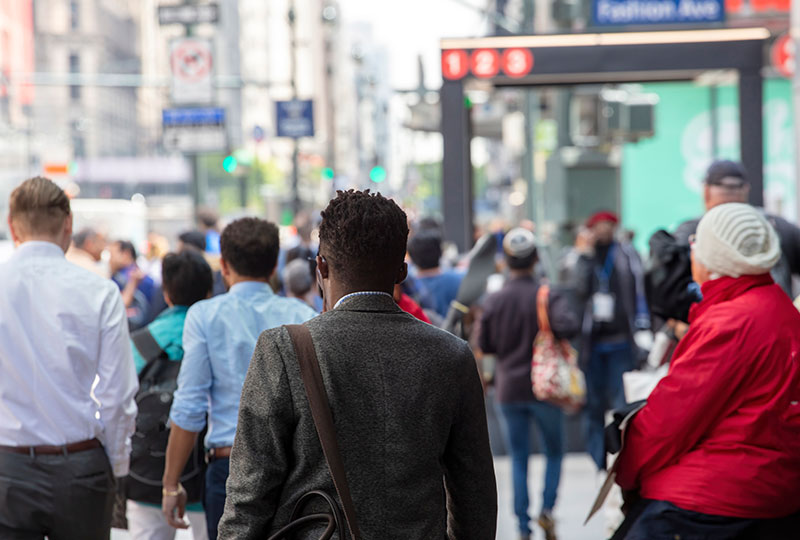
The developing Covid-19 pandemic in 2020 prompted many residents of big cities to leave. Jobs and people were fleeing in waves. Observers were predicting the demise of big cities on the coasts and in the Midwest.
Employers fueled the migration by allowing employees to work remotely.
But recent Census data indicates that the big cities are back. “The prime pandemic year of 2020–2021 was a period of sharp population decline in primary cities, widening the demographic divide between cities and suburbs,” noted William Frey, Demographer and Senior Fellow at the Brookings Institute. What emerged from this time were large disparities in city-suburb growth that were evident in the New York, Dallas, Houston, Atlanta, Boston, and San Francisco metro areas.
But Frey recently noted that over the past two years, primary city population growth showed signs of rebounding, even as growth in major metropolitan areas also rose. The bottom line? The growth advantage of suburbs over cities, while still apparent, has dwindled. “Thus, while suburbanization continues in major metro areas, primary cities are rebounding as well,” he commented.
America’s largest cities—New York City, Los Angeles, and Chicago—experienced large drops in population decline in 2022-2023. Boston switched from population decline to an increase in growth. In the last few years, Washington D.C. and Miami increased residents after showing declines in 2020-2021.
The revival of the cities is good economic news. Many Sunbelt cities have prospered in recent years. Phoenix, San Antonio, Austin, Jacksonville, and others have benefited from migration from the mega-cities. But the big cities are also vital to economic growth.
Cities attract investors
“Cities are the primary engines of global economic activity, generating over 80% of the world’s GDP. Cities offer huge potential to create jobs, foster innovation and creativity, attract investment, and raise incomes—thereby including more citizens in increased growth and prosperity than ever before,” according to a report in Urban Link.
Census data reveals that a big reason for the uptick in big city population is the influx of immigration. Many news outlets deride immigration as causing urban problems. But numerous immigrants, highly educated and industrious, are contributing to the economies of urban areas.
“International migration could be a significant driver of big-city growth in the years ahead. Many real estate investors would be wise to note these demographic changes as they reassess their investment theses,” noted a report in Propmodo.
One of the major stumbling blocks in the way of urban revival is the dual problem of a glut in office space and scarcity of residential buildings. The fact that rentals in big cities are strong shows demand for city living. But office space remains largely vacant, as employers continue hybrid and remote work programs.
Cities are trying to solve this dilemma by helping developers convert commercial to residential space. Many are offering cash subsidies or tax breaks to assist developers. The problem has been that there are usually strings attached, most notably that converting plans require developers to set aside units for affordable housing.
Recently, The Wall Street Journal reported that the Canadian city of Calgary has achieved some success with its conversion plan by offering largely unconditional cash subsidy conversion programs. It seems like a number of American municipalities are studying the plan, including New York, San Francisco, Chicago, Washington D.C. and others.
The bottom line is, Census data showing the resurgence of American cities is welcome news, and demonstrates the resiliency of the U.S. economy. As the Federal Reserve of New York concluded, “Cities are the location of the great majority of economic activity in the United States, and produce a disproportionate share of output. It is thus critical for the economy’s long-term growth that cities operate efficiently.”